
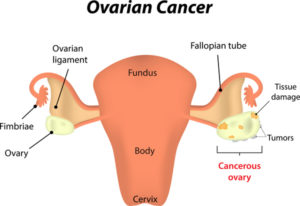
 Ovarian cancer is the cancer of the ovaries (which produce eggs) which is located above the womb connected by two fallopian tubes. There are three main types of ovarian tumors:
- Epithelial tumors: Tumors that start from the cells that cover the outer surface of the ovary
- Germ cell tumors: These start from the cells that make eggs.
- Stromal tumors: They start from the cells that hold the ovaries together
Causes:
The exact cause of the cancer is still not known, but there are some factors that are found to increase the risk-
- Age: Like most cancers, one of the risk factors is increasing age.
- Infertile: Women who are infertile i.e. who cannot conceive have a high risk of cancer development.
- Family history: Around 1 in 10 cancers are due to inherited faulty genes like BRCA1 and BRCA2. Also, if you have a family member with Ovarian cancer or Breast cancer, then the chances of you getting the cancer increases.
- Hormone Replacement Therapy (HRT): A small percentage of ovarian cancer is linked with HRT use.
- Overweight: According to a research, if you are overweight you may have a high risk of cancer development.
- Talcum powder: Using talcum powder in between your legs may lead to irritation causing inflammation and resulting into cancer. Though research is still going on in this field but precautions should be taken while using talcum powder.
Symptoms:
Ovarian cancer symptoms can sometimes be vague and difficult to detect in the early stage. Hence, if any of the below mentioned symptoms continue for long, a doctor should be consulted at the earliest-
- Pain in the lower abdomen and back
- Irregular periods and sometimes bleeding after menopause
- Loss of appetite
- Frequent urination
- Constipation and feeling of tiredness
- Pain during sex
- Abdomen swelling
You can reduce your ovarian cancer risk by:
- Birth control pills: Taking contraceptive pills is linked to reduce ovarian cancer risk. According to research, contraceptive pills contain a hormone called progesterone that reduces the cancer risk.
- Having children: Women with 3-4 children have a very low risk of getting the cancer compared with women having no children.
- Breastfeeding: There is a link found between lowering cancer risk and breastfeeding. Hence it’s advised to breastfeed for as long as you can.
- Painkillers: According to a research, some painkillers like aspirin reduces the risk of ovarian cancer
- Other factors that can reduce the risk includes low fat diet, removal of the uterus without removing the ovaries and getting your tubes tied.
Treatment: